Stray Complete Guide
Introduction
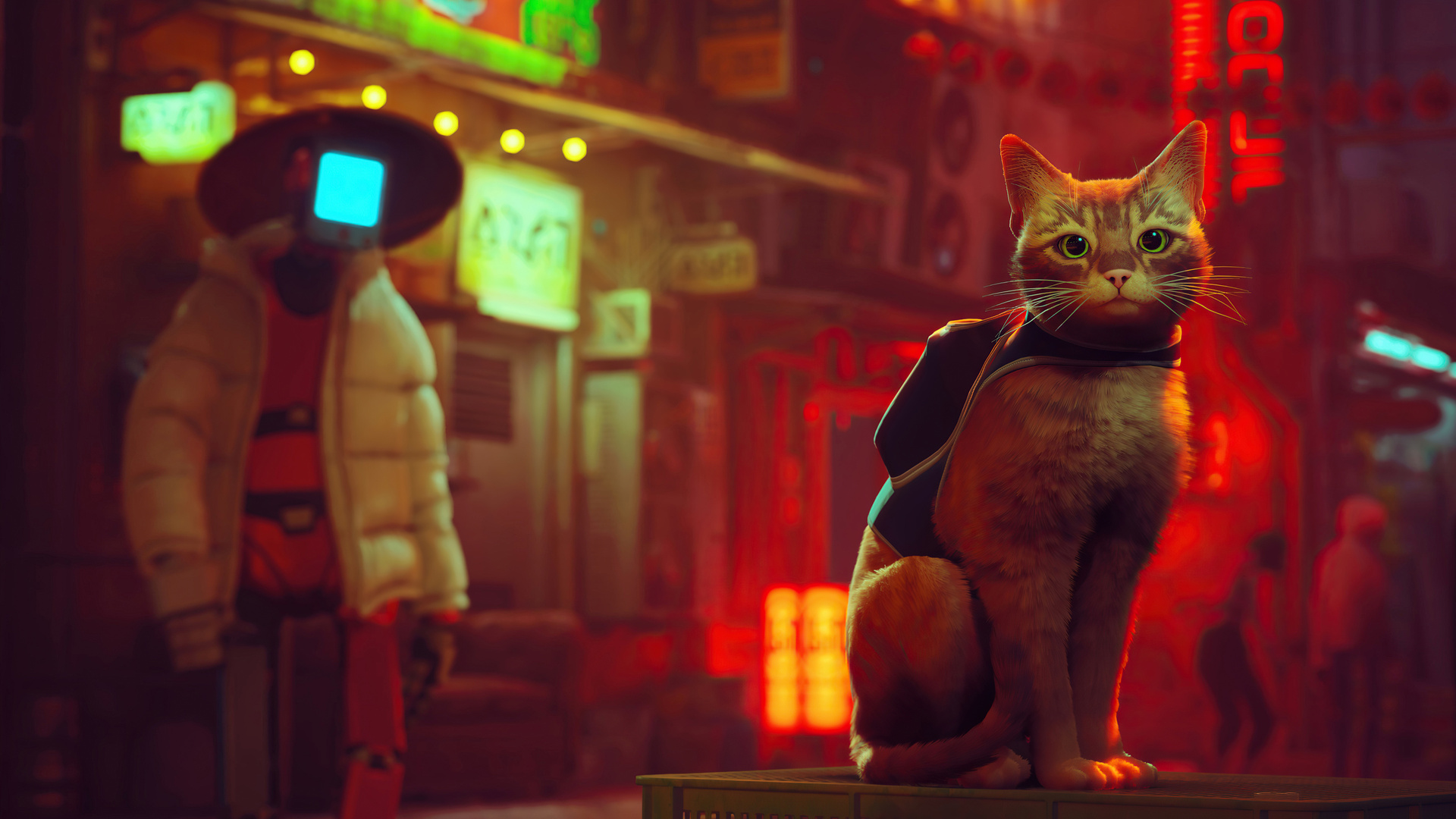
As someone who’s completed Stray multiple times and even 100%’ed the game, I can confidently say it’s one of the most unique and heartwarming gaming experiences of recent years. Developed by the small team at BlueTwelve Studio and published by Annapurna Interactive, this 2022 release lets you experience the world through the eyes of a stray cat lost in a mysterious underground city. What makes it special isn’t just the novel perspective—it’s the way it captures the essence of being a cat while telling a surprisingly emotional story.
Storyline
Stray begins with a group of stray cats exploring an overgrown city. When our feline protagonist becomes separated from the pack after a slip, it falls into the Walled City 99—a vast underground metropolis inhabited by robots who’ve built their own society after humanity’s disappearance. Here, the cat meets B-12, a small drone with amnesia who becomes its loyal companion. Together, they embark on a journey to find a way back to the surface, uncovering the city’s dark secrets along the way.
Gameplay
Open World Exploration
The Walled City 99 is a beautifully crafted environment with distinct areas:
- The Slums: A dilapidated but lively area filled with friendly robots
- Midtown: A more prosperous district with shops, apartments, and a vibrant atmosphere
- The Sewers: Dark, dangerous tunnels teeming with Zurks
- The Control Room: The technological heart of the city
- The Surface: The long-forgotten world above
I spent hours exploring every nook and cranny of these areas, and each has its own unique charm. The Slums, with its neon-lit alleys and robot inhabitants, feels like a cozy cyberpunk neighborhood, while Midtown’s sleek design contrasts sharply with the grittiness below.
Cat Mechanics
The cat mechanics are where Stray truly shines:
- Vertical Mobility: Jump and climb on almost any surface, from pipes to shelves
- Cat-Like Interactions: Meow, scratch furniture, rub against robots, and even knock objects off shelves
- Environmental Play: Bat at balls, curl up in boxes, and sleep in cozy spots
- Sensory Exploration: Use your cat senses to detect hidden paths and objects
As a cat owner myself, I was impressed by how accurately the game captures feline behavior. The way the cat arches its back when scared, purrs when content, and compulsively knocks things over feels incredibly authentic.
Puzzle Solving
Stray features a variety of clever puzzles:
- Environmental Puzzles: Manipulate the environment to create paths or trigger events
- Item-Based Puzzles: Collect and use objects in creative ways
- Navigation Puzzles: Find your way through complex areas
- Communication Puzzles: Interact with robots to gather information
One of my favorite puzzles involves using a radio to distract a Sentinel while I sneak past. It required careful timing and observation, but solving it felt incredibly satisfying.
Stealth and Evasion
Surviving in the Walled City requires careful navigation:
- Zurks: Small, swarming creatures that hunt in packs
- Sentinels: Robotic guards that patrol certain areas
- Hiding Spots: Use boxes, vents, and high ledges to avoid detection
- Alternative Paths: Find creative ways to bypass dangerous areas
I learned the hard way that rushing through Zurk-infested areas is a recipe for disaster. Patience and observation are key—wait for the right moment to sprint past, or find a way to distract them.
Characters
The robot inhabitants of the Walled City are surprisingly endearing:
- The Cat: Our silent protagonist, whose expressions and actions convey more emotion than any dialogue could
- B-12: A small drone with a mysterious past, serving as both companion and guide
- Momo: A friendly robot who runs a bar in the Slums and dreams of the surface
- Clementine: A rebel robot who helps the cat and B-12 in their quest
- Zbaltazar: A wise old robot who provides valuable guidance
- Doc: A skilled mechanic who repairs other robots
Each character has their own personality and backstory, making the world feel alive and lived-in. I found myself genuinely caring about these robots and their struggles.
Zurks and Sentinels
The game’s enemies are both threatening and fascinating:
Zurks
- Behavior: Swarm in groups, attracted to movement and sound
- Weaknesses: Repelled by light, vulnerable to certain weapons
- Strategies: Use environmental hazards like trains or elevators to eliminate them
- Personal Tip: Always keep a charged light source handy when exploring dark areas
I still vividly remember my first encounter with a Zurk swarm. The tension of running through narrow tunnels while being chased by hundreds of these creatures is unlike anything I’ve experienced in a game.
Sentinels
- Behavior: Patrol areas methodically, scan for intruders
- Detection: Will chase and capture the cat if spotted
- Strategies: Use cover, distract them with objects, or find alternative routes
- Personal Tip: Watch their patrol patterns carefully and time your movements
Sentinels are more intelligent than Zurks, which makes evading them a more strategic challenge. I spent many minutes observing their patterns before making my move.
B-12’s Abilities
B-12 is an invaluable companion with several key abilities:
- Hacking: Access locked doors and systems
- Translation: Understand robot language and text
- Light: Illuminate dark areas and repel Zurks
- Storage: Carry items and objects
- Scanner: Identify important objects and paths
As the game progresses, B-12’s abilities become more powerful, opening up new areas and possibilities. I especially appreciated the translation ability, which allowed me to understand the robots’ conversations and lore.
Exploration and Discovery
The Walled City is full of secrets waiting to be discovered:
- Memories: Collect B-12’s lost memories to uncover its past
- Collectibles: Find badges, music sheets, and other souvenirs
- Optional Areas: Explore hidden corners for additional content
- Lore: Learn about the robots’ society and what happened to humanity
- Easter Eggs: Discover references to other games and pop culture
I spent hours hunting for every collectible and secret, and the game rewards exploration with meaningful content rather than just empty collectibles.
Personal Experience
My journey through Stray was filled with memorable moments:
- The Slums Introduction: The first time I explored the bustling robot community, interacting with the locals and getting a feel for the world
- The Zurk Chase: A heart-pounding sequence where I had to outrun a massive swarm through the sewers
- The Midtown Heist: A clever stealth section where I had to infiltrate a high-security building
- The Surface: The emotional climax when the cat finally reaches the surface and is reunited with its family
What struck me most about Stray is how it manages to tell a compelling story without any dialogue from the protagonist. The cat’s actions and expressions, combined with B-12’s commentary, create an emotional connection that few games achieve.
Tips and Strategies
Here are some tips I wish I knew when I first started playing:
- Take Your Time: Stray is meant to be explored at a leisurely pace—don’t rush through it
- Interact With Everything: As a cat, you can interact with almost anything—curiosity is rewarded
- Use Your Environment: The world is full of tools and hazards you can use to your advantage
- Listen to B-12: B-12 often provides helpful hints and context
- Explore Every Path: Many areas have multiple routes, some leading to secrets
Conclusion
Stray is more than just a game about a cat—it’s a meditation on loneliness, connection, and what it means to be alive. The combination of its unique perspective, immersive world, and emotional story makes it a truly special experience.
Whether you’re a cat lover, a fan of puzzle-adventure games, or just looking for something different, Stray is a game that will stay with you long after the credits roll. It’s a testament to the power of indie game development and a reminder that sometimes the simplest concepts can lead to the most profound experiences.
Image path: images/games/stray.jpg